The Banjo Lesson
Henry Ossawa Tanner
1893
American Realism / French Impressionism
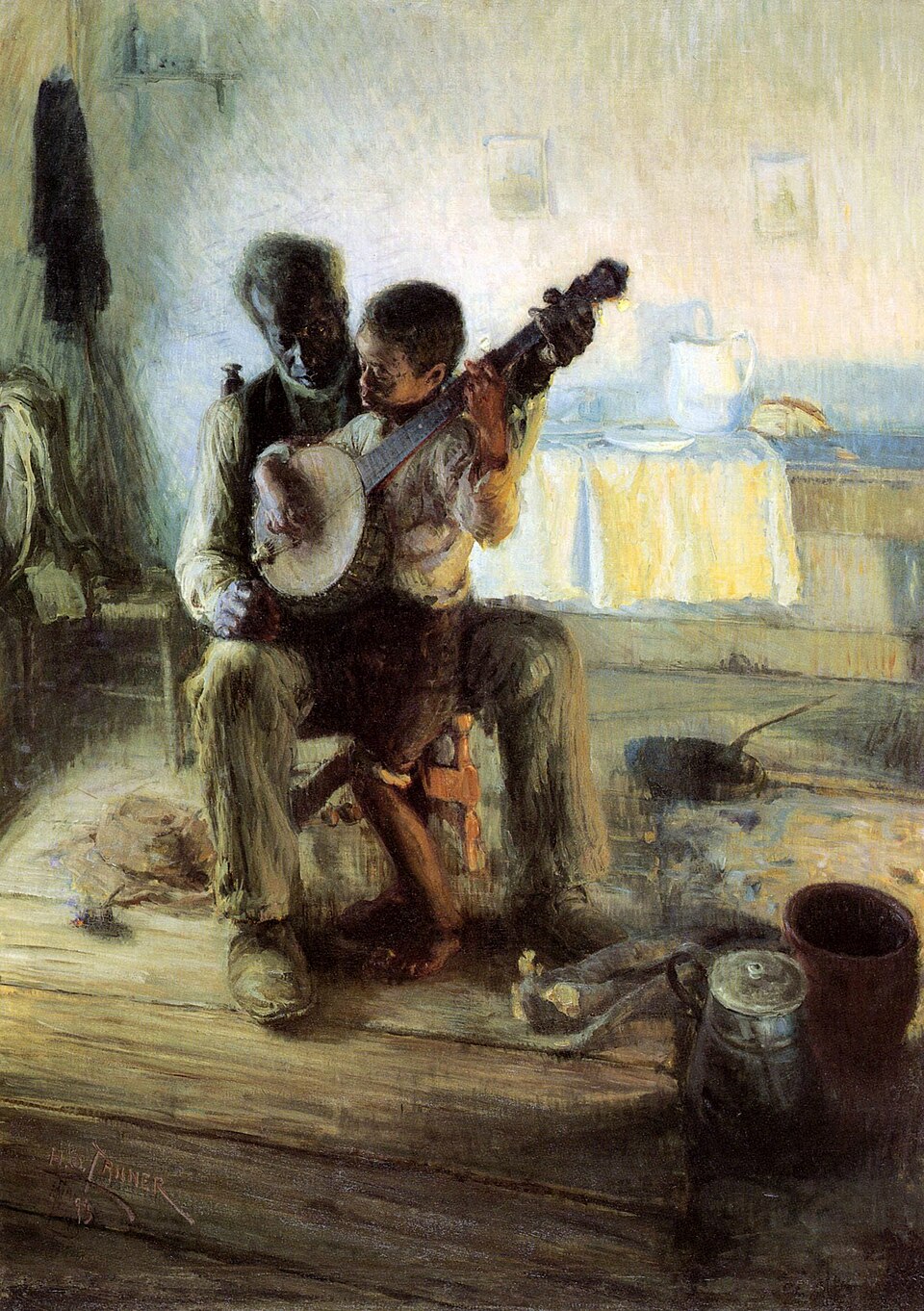
A soulful depiction of what a blend of love and legacy would look like. A grandfather teaching his grandson banjo. The grandfather holds up the banjo in his right hand, taking the weight of the instrument from the kid's arms, making it easy for him to learn. They are both keen. Very serious about the chords. They don't realise the world around them.
This image teeters between richness and poverty. The table cloth not being long enough to cover the table, the hanging coat, the broken floor, and the vessels to fetch leak says about the family trying to stand on its own two feet. Unlike that, the bond they share, the tradition they are building for this family, The Banjo Lesson, the lean on grandfather's lap. This family is rich in it's own ways.
This is a real incident photographed and reconstructed. The scene is liminal. A nice warm evening, the grandfather returns from work, probably a mine or a factory work. His steady, thick, dirty shoes, uniform coat in the chair and hat on the floor suggests that. A serene ending after a tiring day says his pipe alongside the hat. Tanner painted this from Paris, where he had moved to escape the racism that made his career impossible at home. He painted the dignity he knew existed and the world refused to see.
He photographed it. Instinctively. He then reconstructed it. He fell in love with the moment one too many times. Because he was the little boy himself.
The little boy may never know or primarily remember his grandfather for the kind of hard work he has harnessed for this family with all his heart. And he would never call himself poor, for the kind of home he lived in. He would remember his grandfather only by the time he chooses to spend with him. With all his heart, not coaxing, just a serious banjo lesson. And he knows in his heart that he's rich.