Never Enough Chapter-10
Van Gogh & Mark Rothko
The archive opens with an artist who has spent a lifetime listening to it and sat with it
Apr, 2026
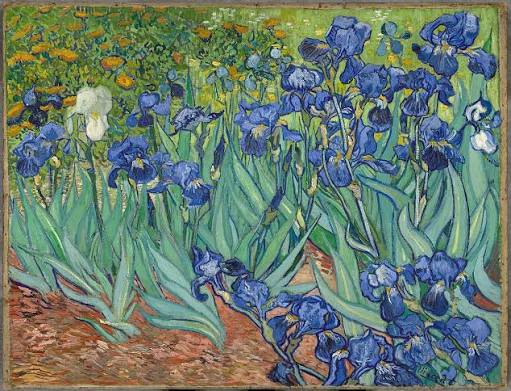
The ultimate act of an unmanaged life is to choose the exact moment the looking stops. For Vincent van Gogh and Mark Rothko, death was not a sudden interruption of their work, nor was it a tragic surrender to the external forces that had spent decades trying to domesticate them. It was a cold, deliberate, and final aesthetic decision.
Having spent their lifetimes building manic architectures of validation only to watch them turn into cages, and having survived the clinical isolation of the asylum only to discover that their bodies would eventually betray them anyway, they both arrived at the same conclusion: the only space left that could not be managed, bought, co-opted, or misunderstood was the absolute silence at the end of the brush. In the end, they did not leave the world because they were defeated by it. They left because the work was finished, and the room was finally entirely theirs.
I.
On the afternoon of July 27, 1890, Vincent van Gogh walked into the vast, open fields behind the chateau in Auvers-sur-Oise carrying a small, rusty revolver he had borrowed under the pretext of scaring away the crows. He did not leave a dramatic manifesto. He did not write a note to an uncomprehending world. He simply stepped off the path he had spent seventy days aggressively erasing from his canvases, leaned against a haystack, and pulled the trigger.
The bullet did not kill him instantly. It missed his heart, lodging itself deep in his abdomen, forcing him to spend his final two days doing exactly what he had done his entire life: waiting in a small, cramped room while his brother Theo sat by his side, watching the light slowly drain from the frame.
As Vincent lay on the iron cot in the attic room of the Ravoux Inn, smoking his pipe in absolute silence, the panic that had characterised his entire existence evaporated. The manic desperation of the Paris self-portraits, the suffocating hero worship of the Yellow House, and the terrifying visions of the Saint-Rémy sky were entirely gone. He looked at Theo and whispered his final, devastating truth: "The sadness will last forever."
But this was not a cry of despair. It was a clinical diagnosis of his own structural displacement. He had realised that the heavy, golden wheat fields and the black, descending crows he had painted just days before were not a temporary crisis — they were the permanent landscape of his mind. By pulling the trigger, Vincent was not escaping life. He was executing the final, necessary brushstroke on a body of work that had outgrown the capacity of his physical chest to contain it. He died on July 29, his palette empty, his account settled, leaving his brother to inherit an archive of seventy paintings that no gallery in Paris knew how to price, but that the universe could no longer ignore.
II.
On the morning of February 25, 1970, the studio assistant Oliver Steindecker walked into Mark Rothko's cavernous, dark studio on East 69th Street and found the artist lying on the floor in front of his easel. Rothko had spent the previous night entirely alone, surrounded by the pale, ghostly pink and blue acrylics that had characterised his final, thinned-out weeks. He was found wearing his underwear and a pair of long black socks — the last, private uniform of a man who had dressed for the world his entire life and finally stopped.
He had taken a razor blade to his arms, cutting deep into the crook of his elbows, slicing through the very veins that had survived the aortic aneurysm two years prior. The mechanics of his exit were chillingly geometric, matching the uncompromising perimeters of his art. He had bled out onto the floor, creating a massive, deep crimson rectangle that stained the wood of the studio space — a final, literal colour field that was entirely unmediated, raw, and absolute.
Like Vincent, Rothko left no note. He had spent his life writing thousands of pages of defensive theory, fighting with curators, boycotting museums, and terminating contracts to protect his identity from being house-broken by the elite. But in the final hour, he realised that words were just another way the world managed him.
By painting the floor with his own blood, Rothko had finally built a threshold that no one could walk through without drowning. The crimson pool on the studio floor was the only statement that could not be categorised under the academic label of Colour-Field Abstraction. It could not be hung on the pristine white walls of MoMA under bright institutional spotlights. It could not be calculated at a square-foot value to serve as high-status wallpaper for Wall Street billionaires.
He had closed the door of the concrete bunker from the inside, permanently.
III.
The convergence of their final moments reveals that the ultimate destination of the unmanaged self is a space where the world's intervention becomes physically impossible. Vincent's bullet in the open field and Rothko's razor in the dark studio were the final, logical extensions of the lines they had been drawing on canvas their entire lives.
They had spent their youths running toward high spires and yellow houses, believing that if they just found the right companion or the right architecture, their interior emergency would be granted a passport into ordinary society. Their deaths were the definitive realisation that no such passport existed. The world does not have a room for the skinless man. It only has a museum or an asylum.
In the end, they painted for themselves the only home that could never be taken away: the total closure of the frame. The frantic, golden wheat fields of Auvers and the massive, darkening colour fields of New York were not detours on the way to a final tragedy — they were the preparation for it.
When you stand today before the late canvases of both men, you are not looking at the evidence of their destruction. You are standing inside the architectures they successfully defended with their lives. The paint remains wet in the mind — vibrant, heavy, and hovering — long after the hands that mixed it have dissolved into the earth. Proof that the unmanaged self cannot be tamed, cannot be bought, and can never be forgotten, so long as there is someone left to stand in the dark and look.