Judith Slaying Holofernes
Artemisia Gentileschi
1612 - 1620
Baroque
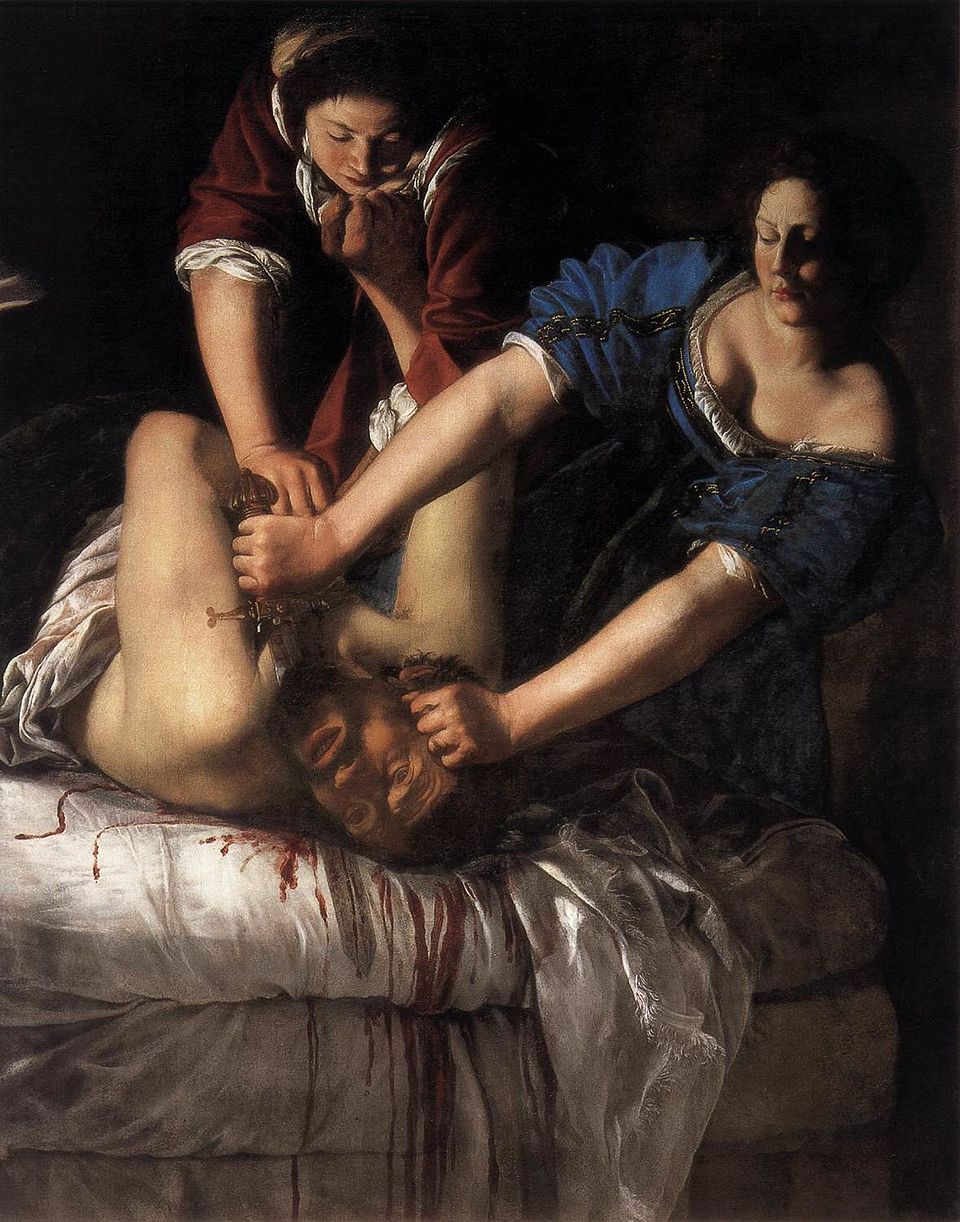
"My illustrious lordship, I'll show you what a woman can do" Artemisia wrote this in a letter to her patron Don Antonio Ruffo while negotiating equal pay as male artists. And her paintings continued to speak for her on that note. This piece was inspired from the bible's deuterocanonical Book of Judith in the old testament. Judith, a widow, from Bethulia decided to free the people of Israel from the siege of Nebuchadnezzar's army. She chose a strong, brutish savage as her target. Assyrian general Holofernes. She took of her humble widow clothes, accompanied by her trusted maid, Abra, enters the army campsite. In the first version she is wearing a royal blue deep cut dress.
She dines with him, seduces him into getting intoxicated, and right when he is almost unconscious, she takes his sword and beheads him. She then takes his head on a basket and presents it and the army fled. She is considered the heroine of Israel to have saved them.
Abra and her are calm, we can see them with their sleeves folded and their hands stiffening over him to restrain him from moving. This is an execution by two women all while he is also trying to resist from this happening. They kill him on his bed in this campsite.
While these ladies are calm and composed, we could catch Holofernes surprised. He knows he is defeated, and he didn't see it coming minutes before it happened. She grabs him by his hair for steadiness. This is one of the most brutal but honest portrayal of this scene.
Artemisia played with light here. While the act of beheading him is under the spotlight, the other subjects are fading into darkness. She painted the same scene again years later. This time the image is alot wider. We can see Holofernes withering in his last moments, his knees risen up.
And another major shift is her dress. A bronze low cut dress. She is wearing a bangle in the hand she holds his hair. Blood splashing from his neck towards her face. Her hair well done and their eyebrows frowning alot more. But what stands the same in both the version is the lighting, the surprise on his face, and his end.
Artemisia was raped at the age of 17. These works of hers are her illustrious revenge. She painting the first version in anger and disablement. But again almost a decade later she painted again. The same image. Adding more power to the women. How mentally hurt and unarmed a woman should've felt for years, that her need to revenge kept smoking within her. Judith and Artemisia look so alike that i cannot see Judith at all. Because, there is no agitation, fury, or vengeance. Artemisia is making a statement. She is aware, bold, and mindful. What if Artemisia chose to chanel the anger in her differently?