NEVER ENOUGH
Van Gogh & Mark Rothko
The archive opens with an artist who has spent a lifetime listening to it and sat with it
Apr, 2026

Two artists. Two centuries. One unknown in his lifetime, one celebrated in his. One who grew up poor, one who chose poverty. One who painted wheat fields and cypress trees, one who painted rectangles of colour so large they could swallow a room.
On paper they share nothing.
Except this: both men made their survival conditional on a response the world could never fully give. Both built their entire lives around a specific kind of validation — not fame, not money, not critical praise — but the feeling of being truly received. Witnessed. Confirmed.
Van Gogh never got it. Rothko got everything that was supposed to be it. Both died by their own hand.
This is not a story about two tragic artists. It has been told that way too many times, and that telling is a comfort we should refuse. Tragedy is not the only source of art. This is about two artists who lived a full life but got drowned in human hunger to realise it. A hunger that does not resolve with success.
Never Enough is not their epitaph. It is a reminder that living — fully, hungrily, without guarantee of being received — is the success story they never let themselves have.
The Ghost
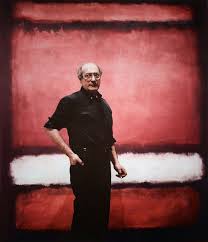
There is a photograph of Mark Rothko taken late in his life, in the 69th Street studio, standing before one of the large dark paintings. He has the look of a man who has been asked a question he has been answering for forty years. The paintings behind him are nearly black — maroon bleeding into umber bleeding into a darkness that is not absence. He is not looking at the camera. He is looking at something the camera cannot follow.
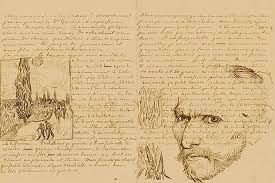
Van Gogh left no photographs of himself with his paintings. What he left instead were letters — thousands of them, mostly to his brother Theo — and in the letters, something that functions like a photograph: the image of a man who needed, more than almost anything, to be seen, and who had learned very early that this was not a need the world was organised to meet.