The Birth of Venus
Sandro Botticelli
(c. 1484 - 1486)
Renaissance
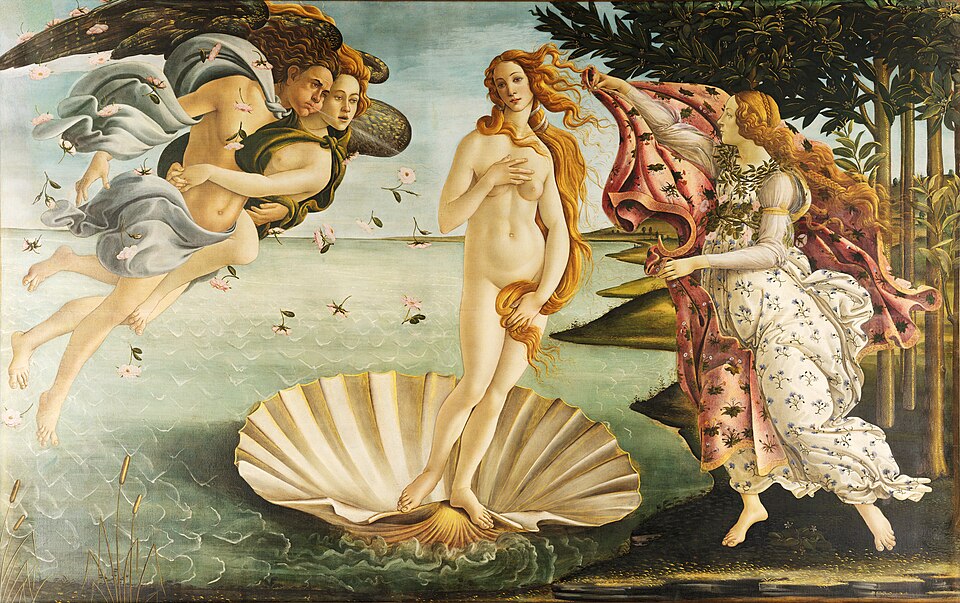
The fight over conventional beliefs and practices with a provocation dressed as beauty. The Birth of Venus. A life size painting of a goddess floating down to earth on a shell. Why the grandeur? It was a controversial declaration. The creative freedom to execute it — the enlightenment to even attempt it — was provided by the Medici family.
I consider this painting as an expression of love, and a work that reflects how beliefs of an artist remains untouchable until the patrons existed.
The Venus, goddess, was modeled after Simonetta Vespucci- a noble woman whose beauty defined that Art Era. She died before even the painting was completed. Almost a decade before it was completed. But Botticelli was so in love that he remembered her face, in accurate detail to portray her as Goddess who was just born. The irony is the just born is an adult, that echoes how much he yearned to know about her, but never did have the opportunity to do so. She was like a new born to him, yet to be discoverd, and uncovered. He carried this uncharted love in him his life and requested to be buried at her feet at his last moments.
Botticelli did explore mythologies against traditional Catholic system. And one of such attempts were The Birth of Venus. But years later he did throw some of the other works around this phase of mythology into the Bonfire of the Vanities started by a power shift from the Medici family to Savonarola. The subjects were naturally more stict towards following Catholic values and stopped questioning, or were curious about the possibilities of other mythologies. Luckily this painting escaped as it was in a private villa away from this movement. The irony is that he used the outdated tempera technique, loyal to his craft even as he betrayed the belief system he had built around his previous patrons. But not his muse.
As an artist he worked on this painting for over a decade mastering the details of the real world, hair, dress, and ripples flowing against the wind blown by Zephyrus. Flowers falling around like the Earth is warmly welcoming Venus. The struggle of blowing a grown woman on Zephyrus's face- forehead shrinked, eyebrows lifted, and cheeks round. The braided hair of the spring Goddess, flow and fold of her dress and the cape she is carrying, and her concern on her eyes while looking at Venus. It is almost like a team of doctors delivering a baby, except for the baby is clean and beautiful. They are inviting and welcoming a radical figure, the concern naturally creeps in.
And finally Venus almost looking the viewer in the eye but not rightly so. She is looking at the shore. She is not shy, she is calm. She is not establishing power, but is already having Gods and Goddesses on their toes. She is not representing an incredibly radical and dangerous revolution, but she was one.